Would you be able to tell?
Pain is massively misunderstood in our pets and I think there’s a couple of reasons for this…
The signs are commonly missed.
They’re there, but because they’re often subtle or intermittent they can be dismissed, misinterpreted or labelled as a negative trait.
It can be hard for guardians to understand or believe.
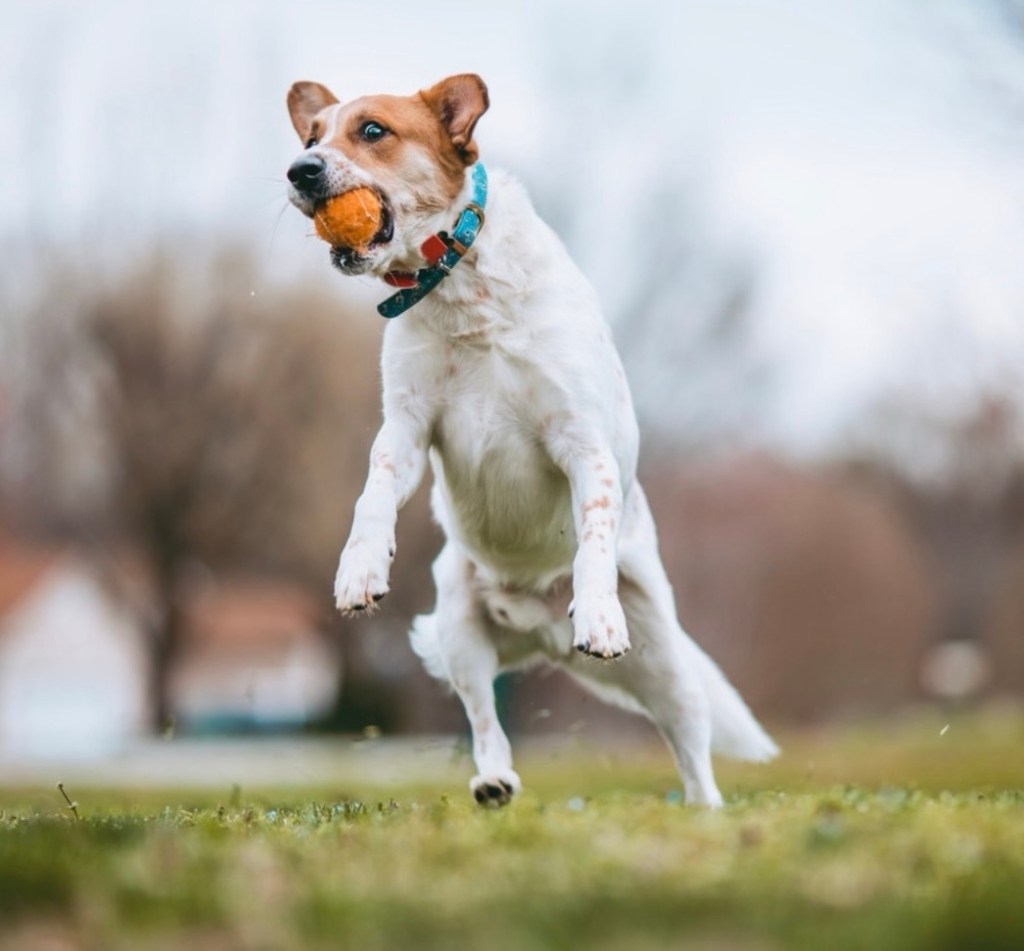
When you see your dog racing around the park, chasing a ball, wagging, jumping up…How could they also be in pain?
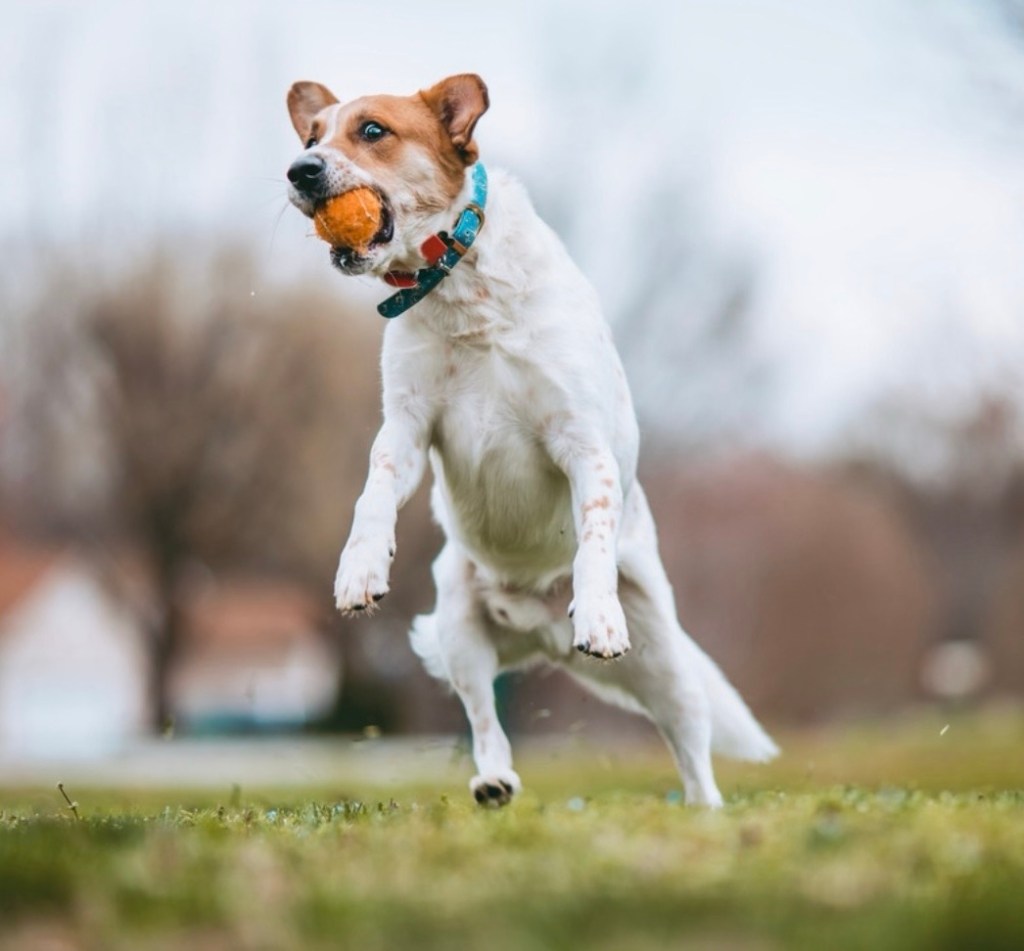
Unless there’s been an acute accident, which is very obvious and you may hear a yelp, whimper or see your dog with a visible injury such as an obvious lameness, our pets tend to suffer in silence. This silent pain can be insidious and gradually leads to more damage over time.
If, like me you’ve ever been unfortunate enough to suffer with any form of chronic pain you’ll understand how miserable it is, it can consume you. It affects every aspect of life from your mood, sleep, relationships, travel, work and general day to day activities.
You may feel irritable, withdrawn, resistant to touch, anxious about being around people, apprehensive about future events, worried or lack confidence in your ability to perform tasks.
Pain is personal, your mild headache may be someone else’s migraine, we can never truly understand someone else’s suffering and while the issue may not necessarily be painful it could be uncomfortable, a low level, but constant annoyance, which will become more and more serious, debilitating and depressing the longer it goes on.
The same is true for our pets.
The difference is they can’t tell us. They can’t go to the chemist for pain relief, they can’t choose to modify their exercise routine or change their plans. They just have to cope.
We think animals hide pain but really they’re not hiding anything at all, they’re carrying on because they have no other option. It’s up to us as their care givers to listen to their subtle cues, to really tune into what their behaviour and body language could be trying to tell us in order to help them.
So how can you tell if your dog’s in pain?
Here’s some clues to look out for. Maybe one of these things alone may not register but when you begin to look more closely and connect the clues. Together they may form a clearer picture to give you a better understanding of what’s going on for your dog.
Eating
Has your dog become ‘fussy’? This could indicate gut related problems, or physical problems such as neck pain or dental issues, perhaps where they’re eating from could be difficult for them. You can find out more from this blog…
Panting
If the temperature is moderate and your dog hasn’t just exercised or they’re not excited, but yet they’re still panting, then it’s most probably pain related.
Posture
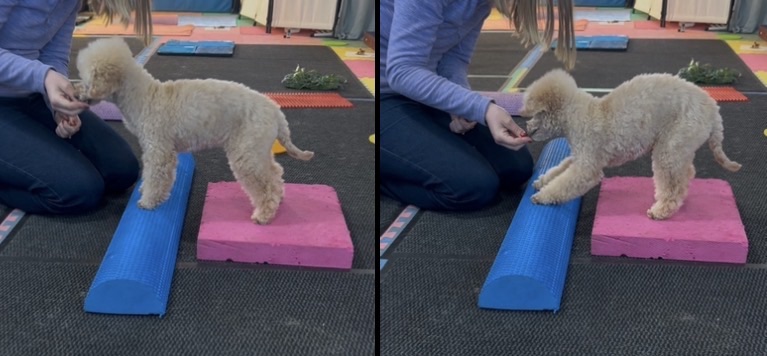
Pay close attention to your dog’s posture. Often subtle changes such as the shape of the spine, or their head position can be great indicators of pain. Are their feet looking flat or splayed? Are the ears and tail in their usual position or have there been changes? These changes happen slowly as the body shifts to compensate for uncomfortable areas meaning they can often go unnoticed.
Looking back at old pictures is really useful to compare your dog’s shape and to be able to notice any differences.
The way your dog sits or sleeps can provide clues, do they tend to prop their head on a cushion, or always lay on one side. Perhaps they have, what’s known as a ‘sloppy’ sit, this is when they don’t sit squarely. This can indicate a way of them trying to reduce pressure by reducing the weight placed on a particular side.
Maybe they have become a little stiff or have started hesitating to do something that usually comes easily to them, such as jumping into the car.
Behaviour
Reactivity, aggression, hyperactivity and heightened anxiety, these are just some of the behaviours dog’s may display when in pain and sadly these are often dismissed as dog’s being difficult, annoying or naughty, when in fact they are struggling to cope. Maybe your dog has always been ‘friendly’ but has suddenly or gradually become less enthusiastic with meetings or playtime.
Have they become less interested in being stroked or handled or maybe they’re presenting certain areas, such as their hind end for more rubs. Perhaps they’ve started or increased rolling around on their back, this can be a great tension reliever for the spine that we tend to assume is just them being ‘cute’!
Coat & Nails
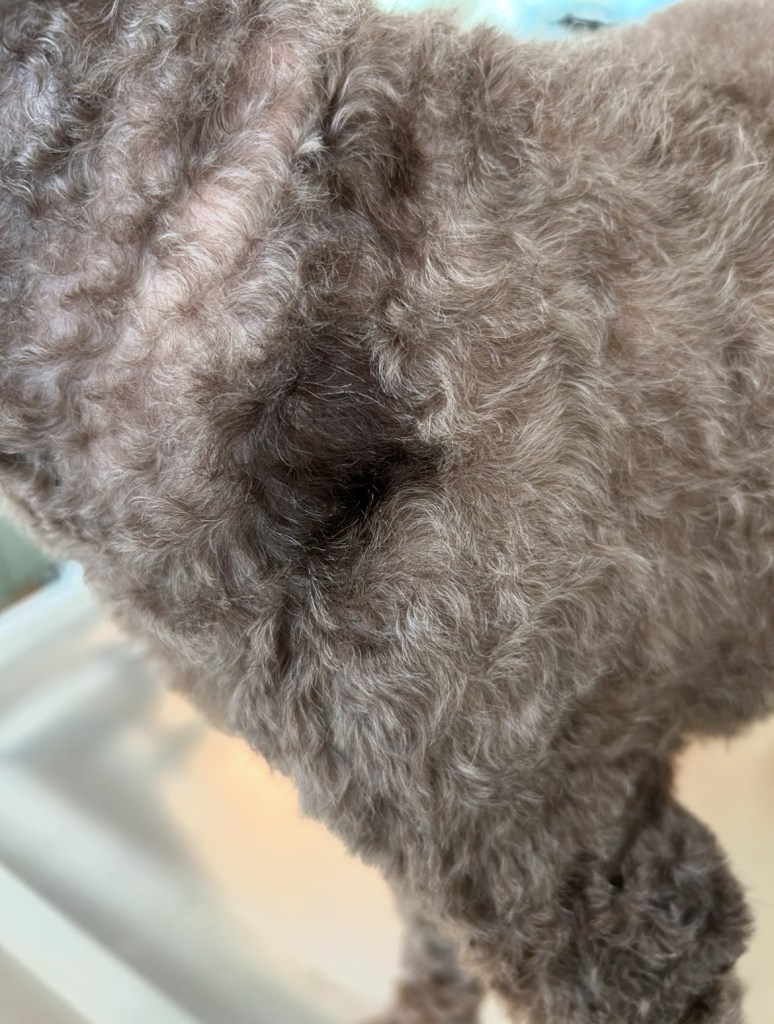
Perhaps you’ve noticed some changes in your dog’s coat? Often the coat may become more wavy in places, especially around the neck or over the hip and pelvis region which can indicate muscular changes or trauma in the underlying structures.
Areas of clumped, loose hair, especially over joints can also indicate issues, likewise colour changes could be an indication of nutrient deficiency, or trauma, which should be investigated.
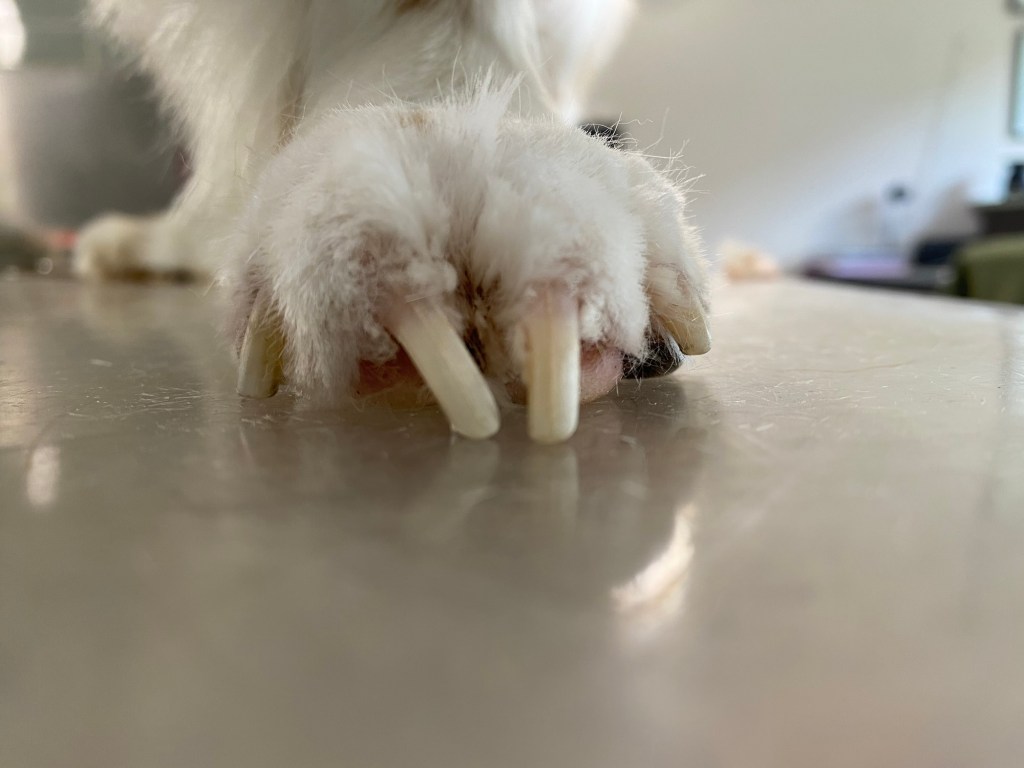
Uneven nail growth can be a great indicator. Due to the shifting of weight to compensate for pain, the nails wear down at different rates depending on how the foot hits the ground.
Keeping nails maintained at the correct length is vital to prevent discomfort. Once nails begin to touch the ground they will alter foot placement which in turns affects gait. This will eventually cause compensatory problems as well as deformity of the bones of the feet.
Licking or Chewing
When dog’s experience pain they may lick or nibble the affected area as a means of pain relief. In the same way you would rub or massage yourself to ease pain or tension. If you notice your dog paying particular attention to their paws, or pelvic region this could be a sign they’re experiencing some discomfort.
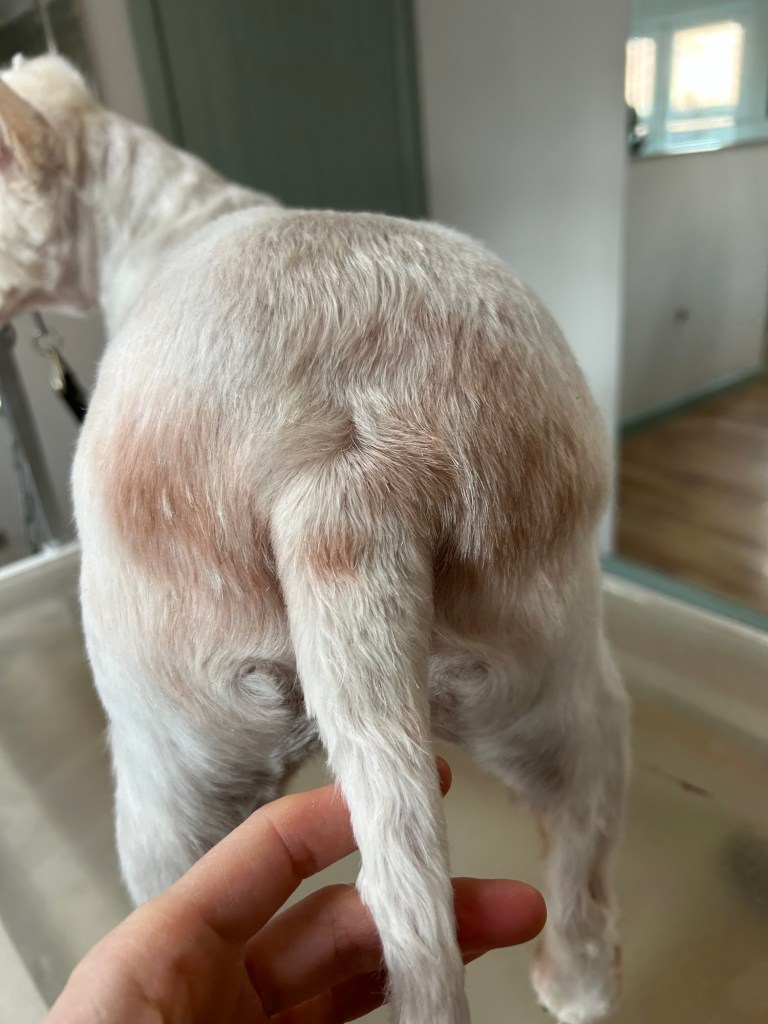
If your dog has a light coloured coat you’ll more than likely notice discolouration of the coat where they’ve been licking. This can sometimes be mistaken and even misdiagnosed as an allergic response rather than pain related. Observe where your dog is licking or chewing, is it just the front feet? Or maybe the front and back but only on the left hand side. These can be important clues as to where their pain originates from and also means you can inform your vet or therapist.
Movement
Has your dog’s movement or gait changed? Perhaps they’ve slowed slightly, maybe they’re pulling more, this can be pain related! Are they ’skipping’ with their hind legs, despite many thinking this is normal for breeds like Terriers, it isn’t. It may be common but it isn’t healthy. Do they tend to trot more, this is more economical than walking and could be their way of making movement more comfortable. Have their toileting habits changed, do they seem as though they’re struggling to find a comfortable position to poo or pee?
Sleep
A good nights sleep is essential for healing and repair, yet when pain is present it can mean sleep patterns are interrupted. This can then negatively affect mood and behaviour. If ever your dog seems restless or their sleep quality or routine changes, then perhaps pain or discomfort is the reason.
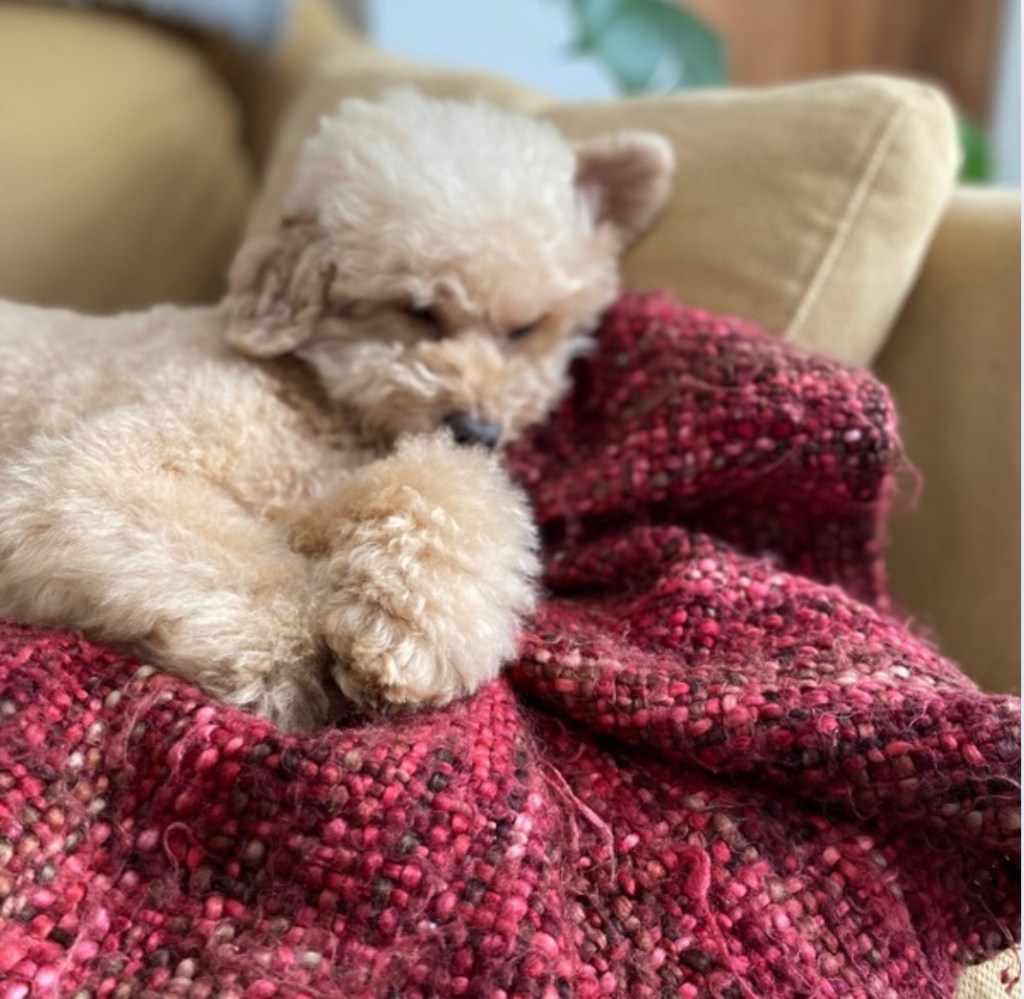
Although this blog is focused on musculoskeletal issues there are plenty of other problems that can cause your dog pain or discomfort. Dental problems are a huge issue for dogs and very regularly dismissed or ignored. I see this on an almost daily basis in my grooming work.
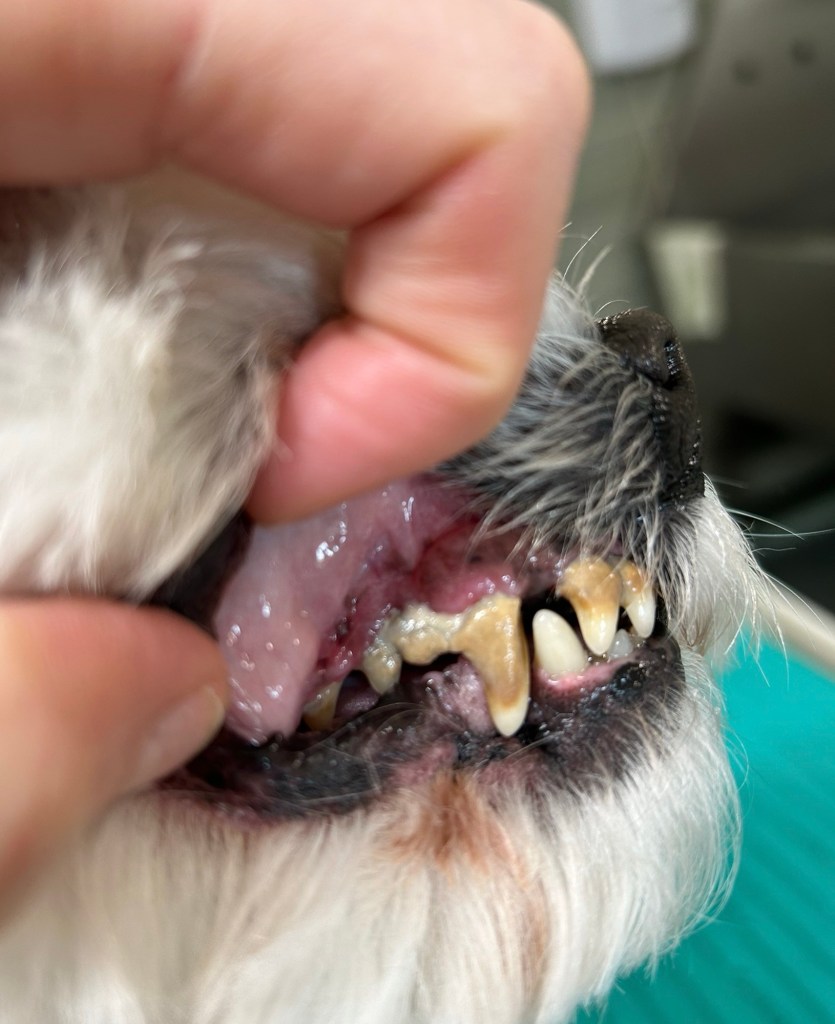
Sadly the fact that a dog is still eating and seems perfectly happy often means guardians don’t understand the level of pain that’s possibly being felt as well as the serious health implications poor oral health has on the organs and your dog’s overall health and quality of life.
You can find out more about oral health here…
What can you do?
There are lots of things that you can do yourself to help support your dog, here are a few simple ideas…
Diet
Feeding a fresh diet will provide your dog with the nutrients their body needs to reduce inflammation, heal and repair. If you’re not able to do this then at least adding some whole food to their kibble or wet food will help boost the nutritional value. Supplementary help may benefit some dogs.
Weight
Maintaining your dog at their ideal weight is essential to avoid health issues. You can be assured if your dog is overweight they will experience discomfort and likely pain due joint issues.
Did you spot the clues? ⬇️
Flooring
Slippery floors are probably the biggest everyday problem for dogs. Every time your dog slips on the floor damage is being done, muscles are tearing. Small micro tears which will eventually cause mobility and stability problems.
Exercise
Providing appropriate exercise and by this I mean avoiding repetitive, concussive play with things like balls and frisbees. These things, although fun are a fast track to arthritis and injury. Dog’s aren’t designed for this sort of movement. Please don’t take this to mean you cant have fun with your dog, it’s just about playing with them in a way that supports their health.
You can find brilliant resources here…https://www.caninearthritis.co.uk
Ramps & Steps
These are such important aids for dogs when they eventually reach a stage when jumping into the car or onto furniture becomes a struggle. It’s a really good idea to teach your dog to use them before they actually need them. If you have a small breed it’s worth using these all the time as excessive jumping up and down from the sofa could be damaging for their joints over time.
Veterinary Care
if visiting your vet for a potential musculoskeletal issue the examination will include checking your dog’s range of motion as well as manipulation of joints, however these tests do not give a full or clear picture. Many dog’s can find the clinic environment overwhelming and stressful which means they can shut down, or become very anxious, the adrenaline they produce overrides any feelings of pain they may be experiencing.
Vet’s, while able to diagnose illness and prescribe medication, they are not soft tissue specialists. This is why a multi modal approach is often the best option to ensure your dog is receiving the most appropriate support for their needs, working with your conventional vet alongside other chosen practitioners.
Of course pain relief will be necessary if your dog is suffering with acute or serious pain however there are many complementary therapies available that can help manage symptoms in a much more holistic way, reducing possibilities of side effects from medication and in many cases reducing the need for them completely.
A few examples…
- Physiotherapy
- Massage therapy
- Light therapy
- Chiropractic
- Acupuncture
- Hydrotherapy
- Exercise/conditioning
I hope this has given you some ideas of things to look out for or explain why your dog may be behaving in a particular way and how best you can support them.
If you’ve found this useful, I’d love it if you could share with other guardians who you think it could help.
Tina Clyde 💚


 Penn View Pets
Leave a comment