I’ve tried everything!
I hear this statement on an almost daily basis. Pet owners, exasperated with their dog’s inability to shift the extra weight that’s crept on, however they’ve usually never tried working with a nutrition consultant! Assuming your vet has ruled out any underlying medical issue, weight gain is usually an easy fix once you have support and a plan to follow.

The majority of dogs I see are overweight, it’s a huge problem (pun intended). Seriously though, it really is, especially as most pet owners are unaware their pet is even overweight.
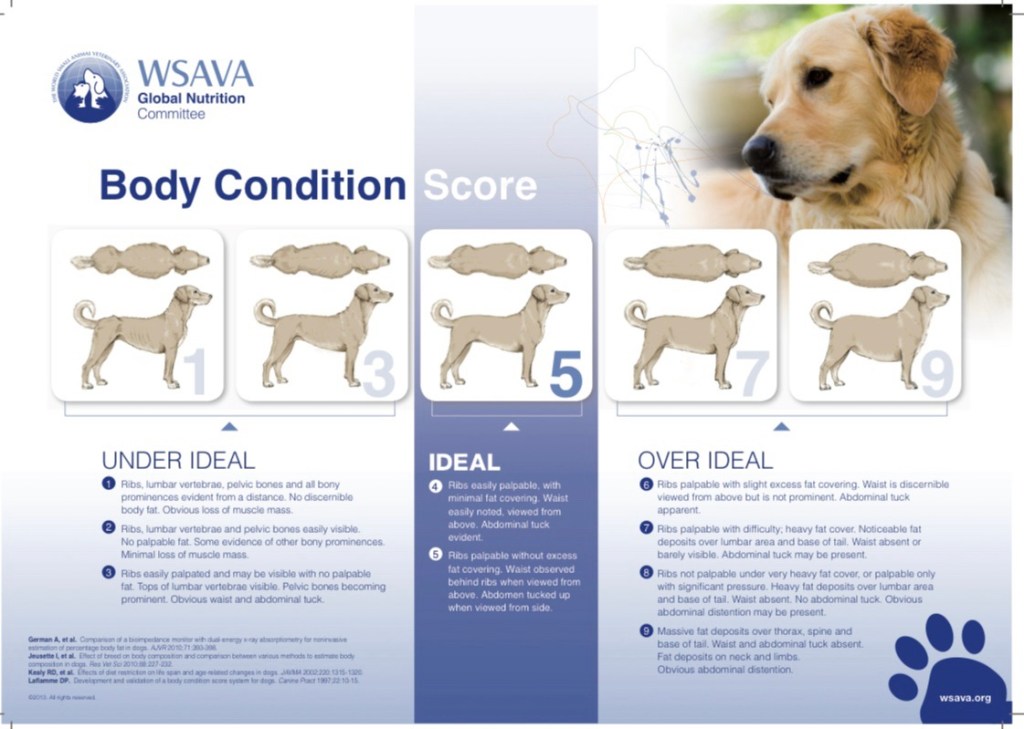
I think we have become so used to seeing overweight people that it has now become ‘normal’ to see overweight dogs and cats. This has become so damaging for our pets, who aren’t able to choose what food and how much of it they eat. This along with weighing pet’s and aiming for an ‘ideal’ number on the scales, (these numbers tend to be averages of specific breeds and often tend to be far too generous). Monitoring their body condition can be a much more effective marker (unless your dog is actively on a weight loss plan, then weight would need to be monitored regularly).
Below is a Body Conditioning Score chart for you to check your dog. A good tip if you have a very thick, hairy coated dog is to check when they’re wet!
Studies have shown, on average dog’s who are overweight live 2 and a half years less than those at a healthy weight. (1) That’s a massive amount of time for our beloved pet’s who don’t live long enough anyway. Who wouldn’t want an extra 2 years with their dog?
Along with the probability of them dying early there’s also the increased risk of all the added health issues, such as arthritis, diabetes, heart disease, respiratory problems, and certain cancers. So as well as feeling unwell they’ll be having to deal with stressful, not to mention costly vet visits.

Why are our pets so overweight?
There’s the obvious one:
Overfeeding:
Many pets are being unknowingly overfed. Most foods have recommended feeding guidelines based on your dog’s weight and/or activity levels however these are often based on ‘active’ dogs or tend to be on the upper end of the scale. These guidelines can sometimes overestimate your dog’s requirements by around 20-50%. They should be used as a guide only. Check the amount your dog is being fed and reduce to a lower amount as necessary. There are plenty of calorie calculators online to use to find out how many calories your pet should be consuming on a daily basis, however these are again guides.
Make sure you measure your dog’s food at each meal by weighing how much is going in their bowl. Stop the guesswork, this is such a simple way of ensuring you’re not overfeeding.
Treats are often another reason dogs and cats are being overfed. These should make up no more than 10% of your pets daily calorie intake. Ensure you’re aware of others in the household who may also be feeding your pet.
Types of food:
A fresh, whole food diet, whether raw or cooked is higher in protein and more easily digested. Dried food is carbohydrate based, which can lead to weight gain, increased blood sugar levels, and potentially contribute to inflammatory responses. Try to opt for single ingredient meat treats or vegetables and most definitely avoid treats such as toast (this is a common one!) and fatty foods such as chicken skin and sausages.

Hormonal changes:
Neutering can have an effect on your pets weight, it’s a very common problem. The reduction of oestrogen and testosterone can affect your pets metabolism, appetite and energy levels. I often find pet owners are either unaware this could be an issue or accept this weight gain as an inevitable effect of neutering, rather than making the necessary changes.
Your pet’s metabolism could slow down up to 20-30% which means you would need to address this in their calorie intake. If not accounted for this excess amount of calories will lead to gradual weight gain.
Age:
As your dog ages their nutritional needs will change. They generally require fewer calories due to being less active so a lower fat diet may be needed.
The microbiome is significantly impacted as your pet ages, which can lead to a decrease in diversity. You can read more about the microbiome here…
Ensuring your dog has fibre content in their diet will assist with gut health and help maintain a healthy microbiome, a prebiotic may also be useful to support the bacteria in the gut.
Protein deficiencies become more common with age, which can lead to absorption issues, causing muscle degradation which eventually affects mobility. Ensuring a quality, moderate to high protein diet is fed will be beneficial.
Nutritional deficiencies:
Something to be cautious about: if you reduce the amount of calories you feed you will also be reducing the amount of nutrients your pet is consuming. Less active pets require more nutrients per calorie so if reducing calories you may need to address this and ensure you are filling any nutrient or protein gaps in your pets diet.
If you would like help calculating your dog’s daily calorie requirement and ensure they’re not suffering from any nutritional gaps in their diet, then please get in touch.
I offer a ‘Weight Management Package’ to provide you with a personalised plan to support you to get them back to a healthy weight so you can enjoy a happy dog for as long as possible!
Tina Clyde 💚
 Penn View Pets
Leave a comment