
As a canine nutritionist, one of the things I help pet guardians with is understanding what’s actually in their pet’s food. Knowing how to decipher your pet food label and understanding what you’re feeding is one of the most valuable things you can do for your dog or cat’s health.

Here are some reasons why this is so important…
You can spot poor quality ingredients
Not all dog foods are created equal. Many brands use vague or misleading terms like meat derivatives or animal by-products, which although not necessarily a bad thing, it’s not transparent. Is that juicy cut of meat pictured on the front of the pack what you’re actually paying for and what your dog’s actually going to be eating?
By learning what to look for on a label, you can avoid disingenuous manufacturing practices and choose a food made with real, whole ingredients that support your dog’s wellbeing.
It helps you avoid hidden triggers
If your dog suffers from allergies, sensitive digestion, or recurring skin issues, the cause could be something in their diet. Food labels don’t always make it obvious, especially when they list things like “cereals” or “meat meal” without specifying the source. Understanding how to decode these terms helps you avoid potential allergens and identify foods that are better suited to your dog’s individual needs.
You’ll know whether the food is complete and balanced
A food labelled as “Complete & Balanced” means it’s formulated to meet all of a dog’s nutritional needs. That’s essential, but not all complete foods are equal in quality. Foods sold as ‘complete & balanced are created to meet FEDIAF guidelines. These guidelines are exactly that, they are a guide and are the minimum amount of nutrients required to sustain life… to keep your dog alive, not to provide optimum nutrition to support them to thrive.
You can manage weight and energy levels more effectively
Feeding guidelines are based on averages and are usually on the higher end of the scale, They often don’t always reflect what your dog actually needs. Some dogs burn more energy than others, while others gain weight on surprisingly small portions. Understanding the label helps you adjust portion sizes sensibly based on the calorie content, rather than just guessing.

You’re less influenced by marketing and more guided by facts
Pet food packaging is full of feel good phrases like “natural”, “premium”, and “vet recommended”, but these claims often mean very little in practice. They’re not tightly regulated and can distract from what really matters. Once you’re confident reading a label, you’ll be less swayed by the branding and more focused on the actual content.
You’ll feel confident knowing you’re doing what’s best for your dog
Feeding nutritious food is the best insurance you can give your dog or cat. It doesn’t need to be difficult, it just requires you to understand that clever marketing and branding is designed for profit and not everything you see on a label can be trusted. Understanding what is actually in your pets food will enable you to make healthier choices to truly support their health, from puppyhood to their senior years.

How to Understand a Pet Food Label: What You’re Really Feeding Your Dog
Reading a dog food label can feel like trying to decipher a different language, vague and confusing, full of percentages, technical terms, and ingredients that don’t always mean what they seem. This short blog is focused on dried and tinned foods rather than raw food diets, I’ll tackle those in a different blog!
Here’s a guide to help you understand exactly what you’re feeding your dog…
1. Start with the ingredients list (composition)
The ingredient list tells you what’s in the food, in order of weight before cooking. Ideally, the first ingredient should be a named animal protein, such as chicken, turkey, lamb, beef or salmon, NOT “meat meal” or “animal derivatives”.
If the first few ingredients are cereals, maize, or meat by-products, this means the food contains more cheap filler than nutrition. Look for whole foods, listed as percentages so you know exactly how much of that specific ingredient is in the food.
2. Understand the terms
Many pet food labels use broad terms that can be misleading. Here’s what a few of them mean:
- Meat and animal derivatives: This can refer to any part of the animal, including less nutritious parts such as connective tissue or organs. This lacks transparency by not stating which species the meat comes from. You should feel assured you’re feeding your pet what it says on the label!
- Cereals: Another vague term, it could mean wheat, maize, rice, or anything else in the cereal family. If your dog has sensitivities or allergies, this can make it hard to avoid triggers.
- Complete food: This means the product is designed to provide all the essential nutrients a dog needs. That’s a good start, but quality still matters.
- Complementary food: This does NOT contain all your pets essential nutrients. It is meant to be added to complement their diet.
3. Check the analytical constituents
This section breaks down the content of macro nutrients; protein, fat, fibre, and ash. It’s important to notice carbohydrates are not required to be listed. You can easily work this figure out by adding the percentages of the protein, fat, ash and moisture together, then minus from 100% this will give you the carbohydrate content.
While the figures vary between types of food, a few general tips apply:
- Protein: A good quality adult food typically contains around 20–30% protein for dry food. Quality protein is essential for health.
- Fat: Is necessary for energy and healthy skin and coat, however an excessive fat content can lead to weight gain.
- Fibre: A small amount can be beneficial for a healthy gut and digestion.
- Ash: This is the mineral content of the food, usually around 8%
5. Claims and marketing, take them with a pinch of salt
Ignore the “natural” or “recommended by vets” claims. They don’t mean anything. Always concentrate on the ingredients and nutritional breakdown rather than be tempted by clever marketing and fancy branding.
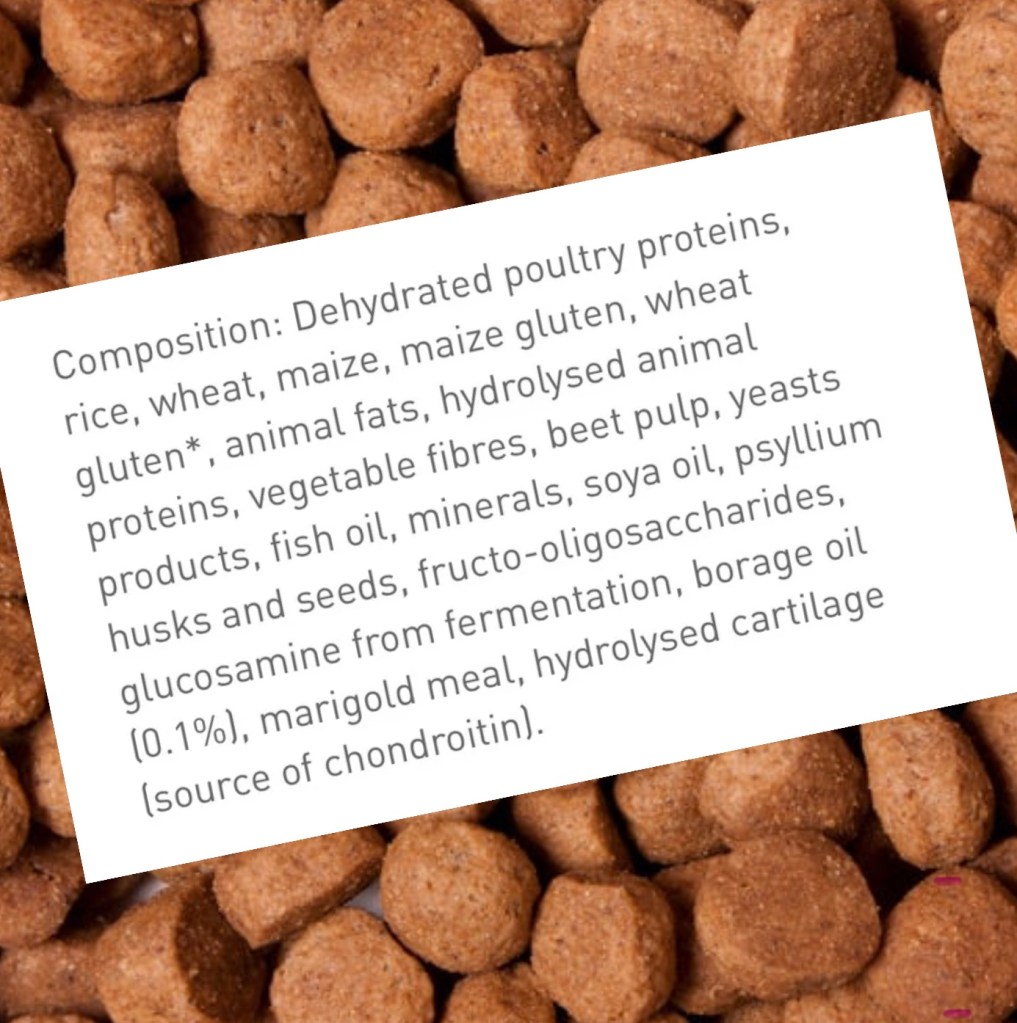
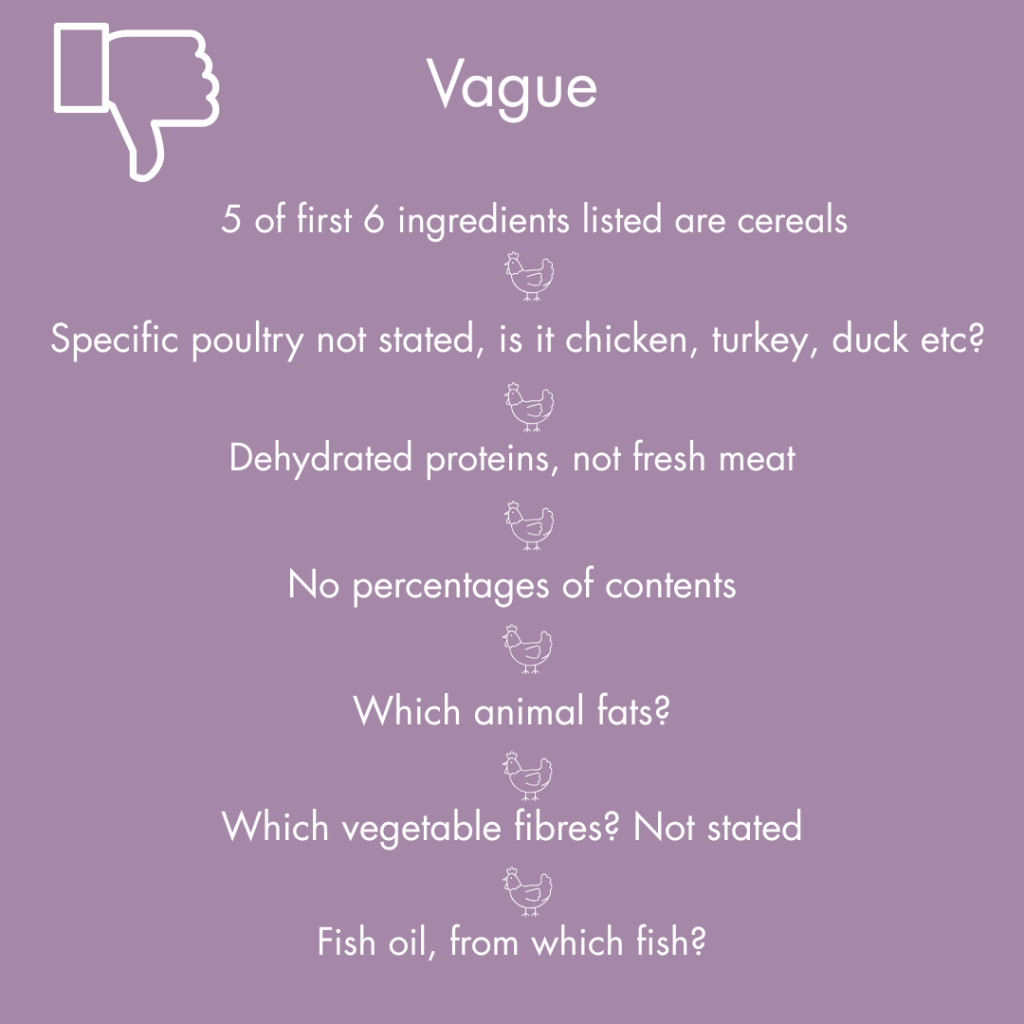
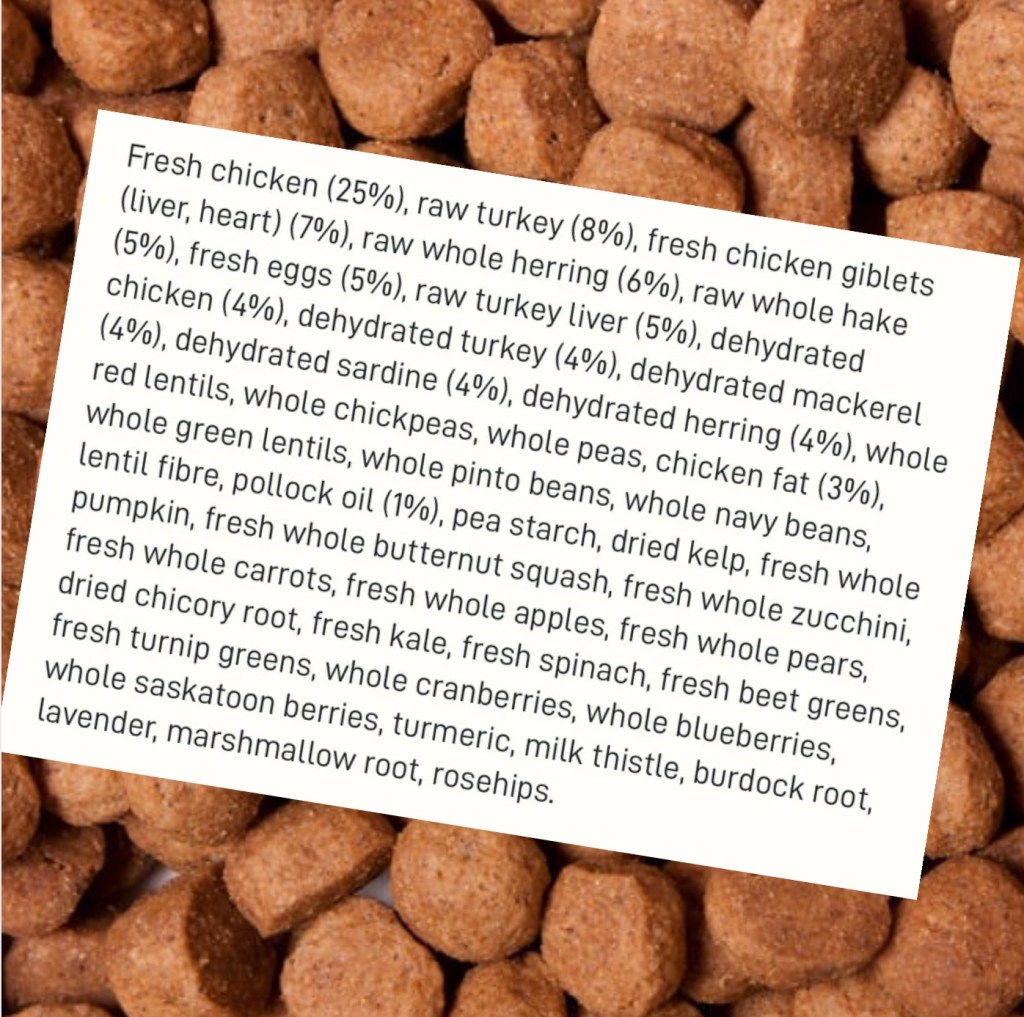
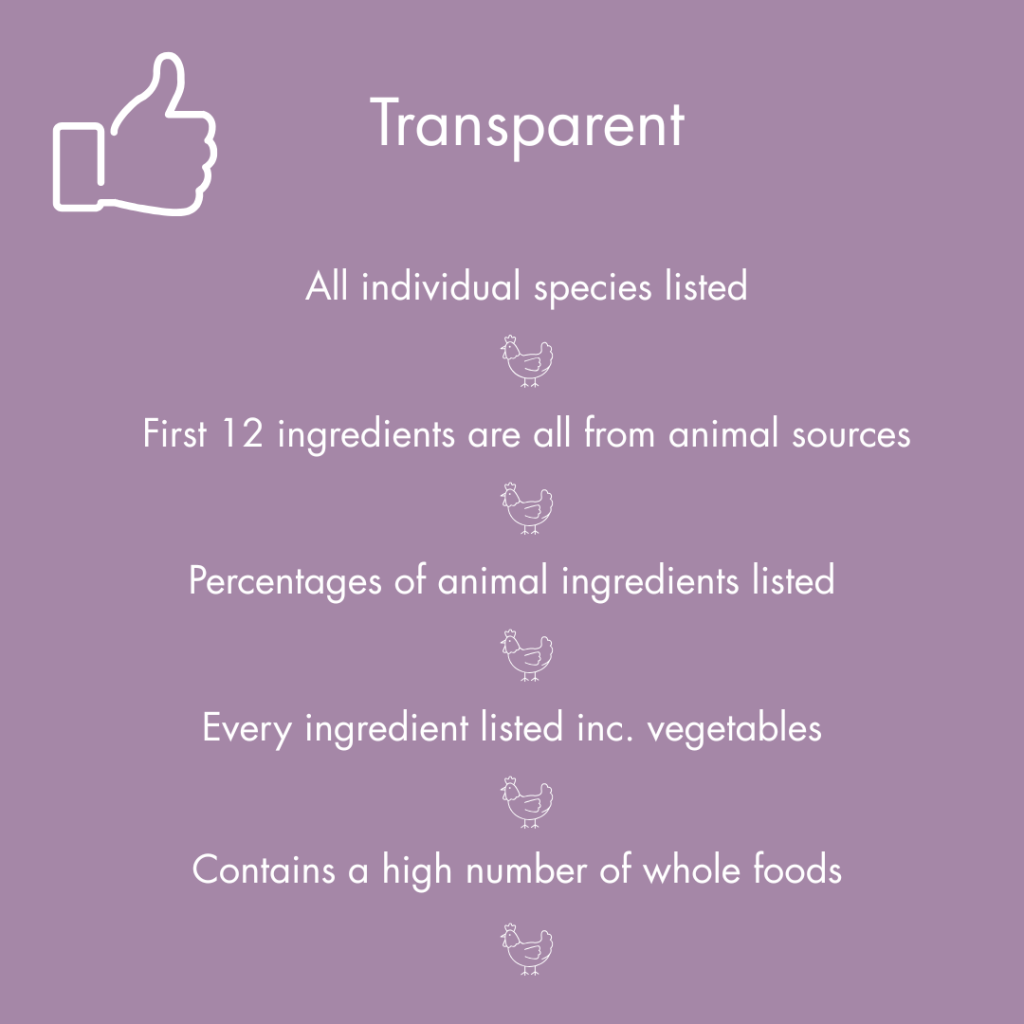
Below are two examples of popular food ingredient lists. Both are dried foods and are a great comparison to demonstrate just how much diets can vary.
The first food has vague ingredients and no percentages listed. The second is much more transparent, has better quality ingredients and they are all listed so you know exactly what your dog is eating.
If in doubt, ask a professional
If you’re unsure whether your dog’s current food is suitable, or you need help choosing a better option, that’s where I come in. Nutrition doesn’t need to be complicated, with the right information, you can feed your dog in a way that truly supports their health and wellbeing.
I offer unbiased recommendations for your pet, I will always advise optimal nutrition, tailored for your dog, whilst also taking into consideration your limitations and preferences.
If you’d like to book a consultation for your pet or find out more information, please get in touch.
Tina Clyde 💚
 Penn View Pets
Leave a comment