Why your dog’s behavioural problems may not be a training issue…
We all know that ultra processed foods with artificial additives, preservatives and colourings have adverse effects on our health and how diets lacking in essential nutrients can be detrimental. Lets take a look at how this can also impact our dogs from a behavioural and emotional perspective.

Your dog’s behaviour isn’t just a case of genetics or training, it’s also hugely affected by their environment and diet. This is why it’s so important when investigating behavioural issues that we look at the bigger picture. By taking a holistic approach and looking at every aspect of your dogs life, including their health, history, diet, lifestyle and environment it will enable us to have a better understanding and maybe approach their treatment from a different perspective.
Many dogs suffering from behavioural issues are written off as hyper, lazy, destructive, aggressive etc… Perhaps training has been attempted without any progress. In the first instance an examination should always be carried out with your vet to rule out any underlying medical concerns. Next, I would advise looking into your pets diet.
Gut health is directly linked to the brain. This connection, via the vagus nerve, is called the gut-brain axis. It allows communication between the gut and brain, it’s why when you feel nervous, your stomach churns or if you feel excited you have ‘butterflies’. These feelings are the result of hormones relaying messages to the brain, including what are often referred to as the ‘happy hormones’ such as serotonin and the reward/motivation hormone, dopamine.
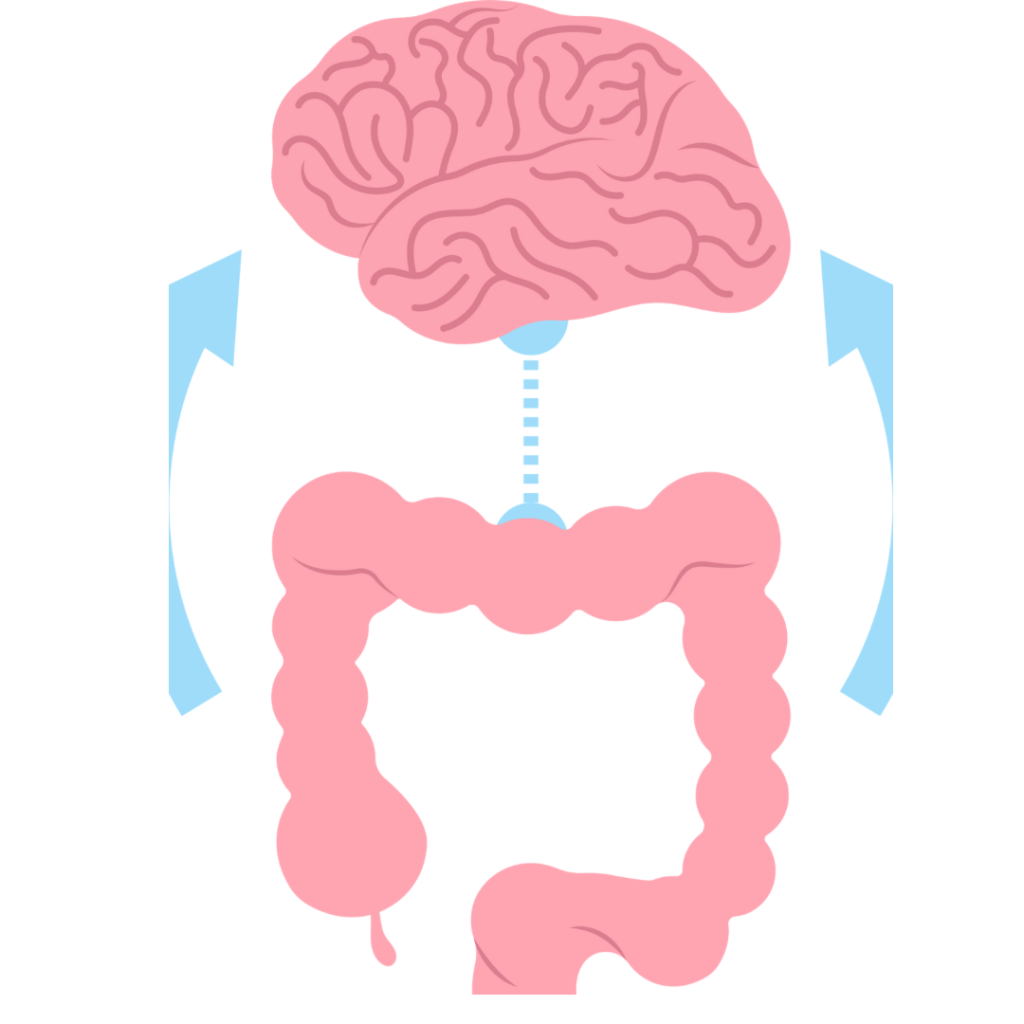
Some examples of neurotransmitters are Serotonin, Dopamine, Glutamate, Norepinephrine and Gamma-aminobutyric acid (GABA). These all have their individual functions but are involved in regulating mood either by acting in an excitatory or inhibitory manner, meaning they can either excite or calm your dog’s nervous system.
Many people assume the ‘happy hormone’ serotonin is produced in the brain, in fact 90% is produced in the gut, hence why it’s vital to have a healthy gut (1). If gut health is compromised, production of serotonin will also suffer.
The body produces serotonin from tryptophan, this is an essential amino acid, meaning it must be obtained from food (2). Poultry is a great source of tryptophan and whilst ruminant protein sources contain tryptophan it’s present in lower levels. Studies have shown increased tryptophan levels have been linked to a reduction in canine aggression (3). Serotonin production also requires other enzymes and vitamins, such as B6 and B9, this is why it’s so important for your pets to eat a balanced diet to ensure all the necessary nutrients are present.
A lack of serotonin can lead to noticeable changes in mood, behaviour, and overall wellbeing. Low levels can contribute to several issues, including:
Increased Anxiety & Stress Dogs may become more fearful, reactive, or struggle to cope with new environments or changes in routine.
Depression-Like Symptoms A lack of interest in play, social interactions, or general lethargy may indicate low serotonin levels.
Aggression & Irritability Reduced serotonin is linked to impulse control problems, making some dogs more prone to aggressive or unpredictable behaviour.
Obsessive or Compulsive Behaviours Repetitive actions like excessive licking, tail-chasing, or pacing can be signs of serotonin imbalance.
Sleep Disturbances Trouble settling, restlessness at night, or disrupted sleep patterns can occur when serotonin is low.

Since serotonin production depends on a balanced diet with enough tryptophan, B vitamins, and essential nutrients, you can understand how vital the role is that nutrition plays in your pets emotional stability and behaviour.
This is where a consultation with a nutritionist would be really helpful to investigate your pets gut health and implement a healing protocol alongside any dietary adaptions to nutritionally support their gut health. This in turn will improve production and function of hormones that are essential in order to be able to regulate mood and behaviours.
If your dog is struggling with behavioural issues, please get in touch to find out how I can help.
Tina Clyde 💚
1) https://www.frontiersin.org/journals/veterinary-science/articles/10.3389/fvets.2019.00498/full
2) https://www.sciencedirect.com/science/article/pii/S2161831322002952
3) https://pubmed.ncbi.nlm.nih.gov/10953712/


 Penn View Pets
Leave a comment